

Details:
Technologies Used
- Ansys Discovery
- Ansys Fluent
- UDF
- VOF
Objective:
Simulate the Resin Transfer Molding (RTM) process for e-motor components to improve process understanding, predict resin behaviour, and reduce manufacturing defects.
Challenge:
The RTM process involves complex interactions between resin flow, temperature, and curing behaviour. The injected resin begins to solidify within the mold, while the complex geometry of the parts increases the risk of air entrapment and void formation. Additionally, direct inspection of the resin flow and curing process during manufacturing is extremely limited, making defect prediction difficult.
Solution:
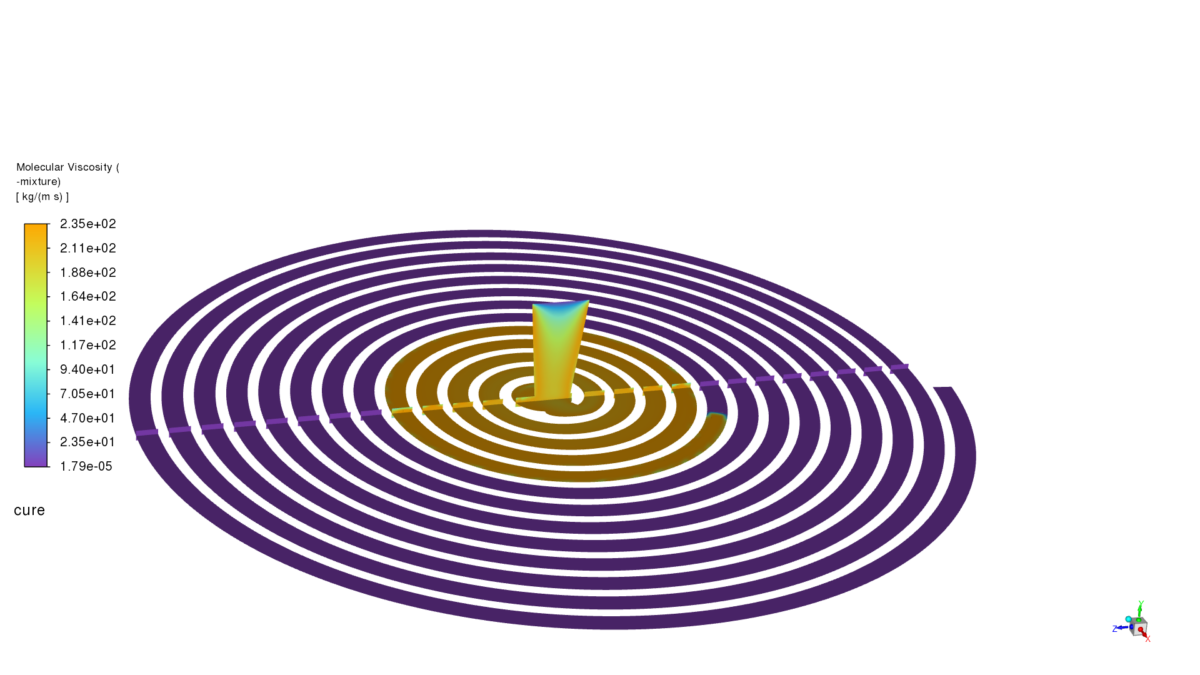
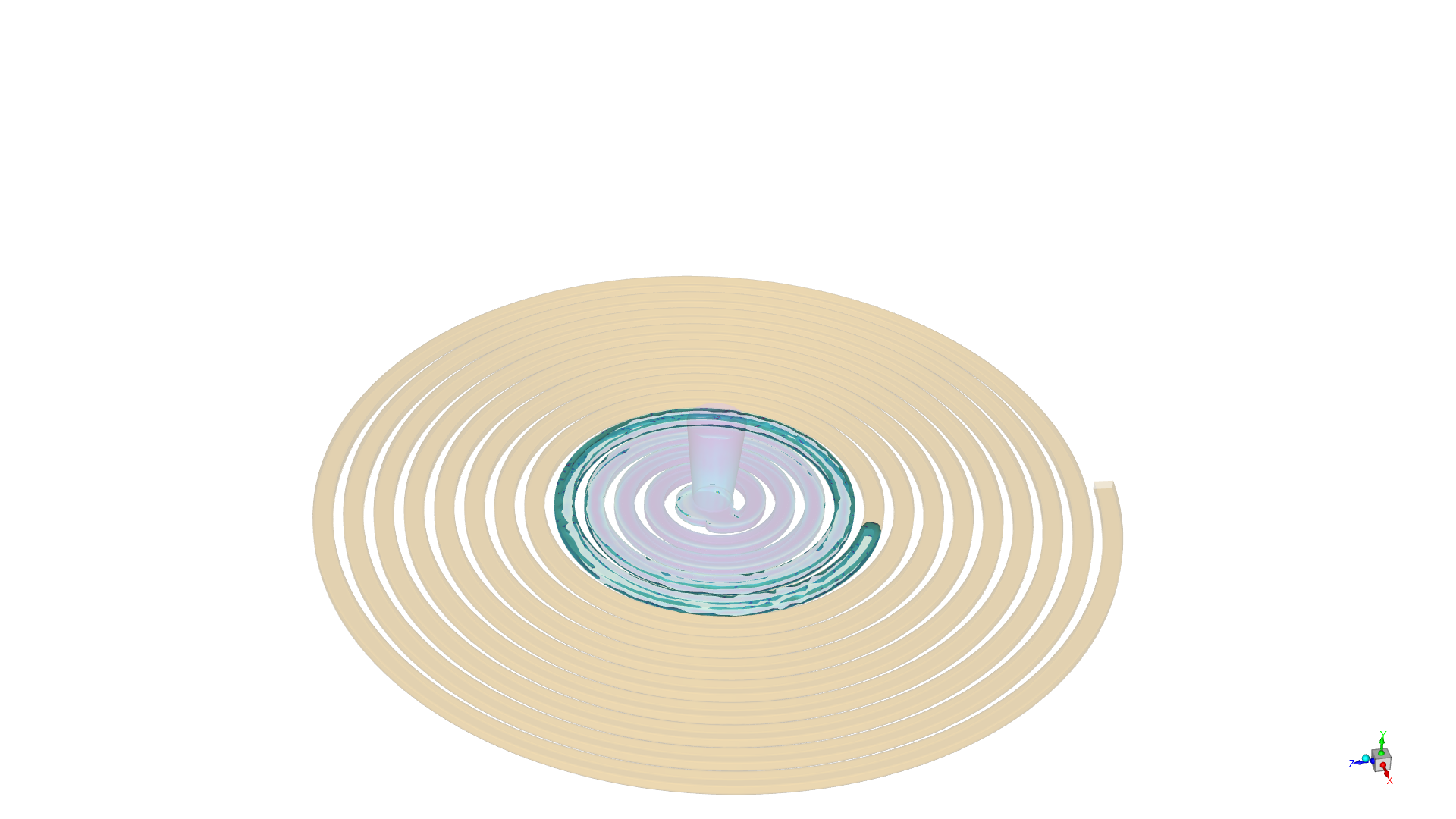
A detailed 3D CFD model of the RTM process was developed to simulate resin injection, flow progression, and solidification. Resin curing and hardening behaviour were modelled using temperature- and age-dependent material properties, implemented via User-Defined Functions (UDFs).
The simulations enabled full visualization of resin flow fronts, temperature distribution, solidification zones, and potential air entrapment areas, providing insights that are not accessible through physical inspection alone.
Conclusion:
A validated simulation workflow for RTM resin solidification was delivered, incorporating multiple hardening and curing models. The approach was demonstrated through a standard test case, serving as a robust showcase for predicting process behaviour, identifying potential defects, and supporting future optimization of RTM manufacturing for battery components.